The most common question at a first consultation is “what will we breathe down there?”. The short answer: the same air as above ground, but cleaned and supplied at a controlled pressure. How exactly that works — below. If you are interested in the code requirements, we covered them separately in our article on DBN V.2.2.5.
Where the air comes from underground
A shelter is not “sealed” — it breathes through protected air intakes. On our projects we always install two independent intake channels at least ten metres apart: if one is buried or smoked out, the other keeps working. Each channel consists of four elements:
- an intake head with rain and shrapnel protection;
- an overpressure valve that cuts off the blast wave;
- a filter cascade — from a dust filter to a carbon column;
- a fan with both electric and manual drive.
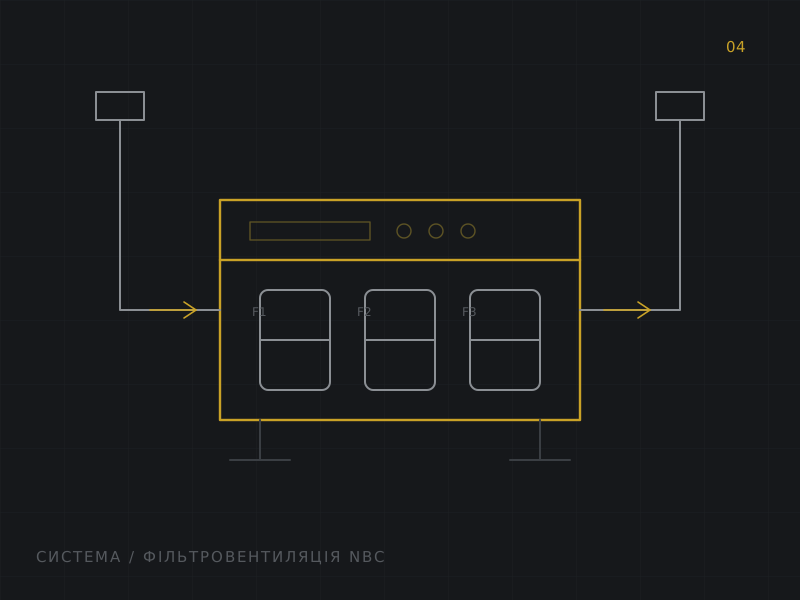
Three operating modes
The system is designed so residents can switch modes with a single damper turn — no 40-page manuals:
- Clean ventilation. The everyday mode: air passes only through the dust filter. Minimal energy consumption.
- Filter-ventilation. Air goes through the entire cascade; the rooms are kept at an overpressure of 50–80 Pa — contamination cannot “leak” inside.
- Full isolation. Dampers closed, breathing from the reserve. For a six-person shelter, regeneration provides up to 12 hours of autonomous cycle.
“A system that hasn’t been switched on for a year is a system that doesn’t exist. Once a month the filter-ventilation must run for at least an hour — we write that into the service contract.”
Filter class comparison
| CLASS | WHAT IT TRAPS | SERVICE LIFE | WHERE IT WORKS |
|---|---|---|---|
| G4 (pre-filter) | Dust, pollen, large particles | 6 months | Everyday ventilation |
| HEPA H13 | 99.95 % of aerosols from 0.3 µm | 12 months | Living modules |
| NBC carbon column | Gases, vapours, chemical agents | 5 years in storage | Filter-ventilation mode |
The carbon column’s service life counts from the moment its factory packaging is unsealed, so we keep it in storage and only install it into the cascade during commissioning.
What to check in your design
- two independent air intakes at least 10 metres apart;
- a manual fan drive — electricity may be the first thing to go;
- a CO₂ sensor wired to the panel in the living module.
If your designer cannot show an air exchange calculation per resident, that is a reason to find another designer. Our team hands the calculations to the client together with the design.
Have an existing shelter and doubts about its ventilation? Leave a request — an engineer will review the design and tell you what to do with it.